Digital Marketing Services for Modern Businesses
Digital Marketing Services have become essential in today’s dynamic business landscape, where online presence is crucial for success. With the rise of the internet and social media, businesses can now reach their target audiences more effectively than ever. This introduction highlights the significance of digital marketing, encompassing various services that cater to different business needs and objectives.
Digital marketing services include everything from search engine optimization () and social media marketing to email campaigns and content creation. Each service plays a vital role in establishing a brand’s visibility and engagement with customers. Understanding these services and identifying the right target audience is critical for any business looking to thrive in the digital age.
Introduction to Digital Marketing Services
Source: mybangla24.com
Digital marketing represents a fundamental shift in how businesses engage with their customers. In a world increasingly dominated by technology, digital marketing embraces various online platforms and strategies to connect with a target audience effectively. The importance of digital marketing in today’s business landscape cannot be overstated; it offers unparalleled opportunities for reach, engagement, and conversion, allowing brands to thrive in a competitive environment.Digital marketing services encompass a wide array of elements that work together to enhance a brand’s online presence.
This includes strategies such as search engine optimization (), social media marketing, content marketing, email marketing, and pay-per-click advertising (PPC). Each component plays a critical role in creating an interconnected ecosystem that drives traffic, generates leads, and ultimately leads to sales.
Elements of Digital Marketing Services
Various core elements constitute digital marketing services, each contributing uniquely to an organization’s online strategy. Understanding these elements is vital for leveraging their potential effectively.
- Search Engine Optimization (): Enhances visibility on search engines, ensuring that a website ranks higher for relevant s.
- Content Marketing: Involves creating and distributing valuable content to attract and engage a target audience.
- Social Media Marketing: Utilizes platforms like Facebook, Instagram, and Twitter to connect with audiences, fostering brand loyalty and engagement.
- Email Marketing: Involves sending targeted emails to nurture leads and maintain customer relationships.
- Pay-Per-Click Advertising (PPC): A model of internet marketing where advertisers pay a fee each time their ad is clicked, increasing website traffic.
The target audience for digital marketing services is diverse, encompassing various demographics and interests. Businesses of all sizes—from startups to established enterprises—seek to harness the power of digital marketing to reach their potential customers. Additionally, non-profit organizations, educational institutions, and even government agencies may implement digital marketing to promote their initiatives and services effectively.
Types of Digital Marketing Services
Source: influencermarketinghub.com
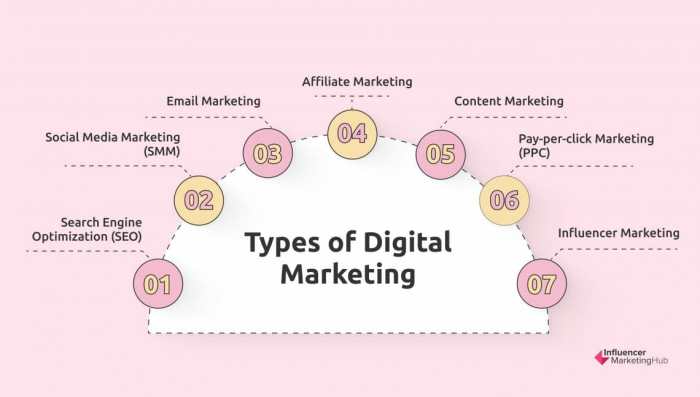
Digital marketing encompasses a variety of services designed to enhance a business’s online presence and connect with its target audience. Understanding these various types of digital marketing services is crucial for companies looking to leverage the power of the internet to grow and succeed in today’s competitive landscape. Each service offers unique benefits that can be tailored to meet specific business goals.
Search Engine Optimization ()
Search Engine Optimization () involves optimizing a website to improve its visibility in search engine results. The primary goal is to increase organic (non-paid) traffic by ensuring that the website ranks higher for relevant s.
- Benefits: enhances brand visibility, builds trust, and increases the chances of attracting potential customers actively searching for products or services.
- Example: A local bakery implemented an strategy focusing on “best cupcakes in [city name]” and saw a 50% increase in website traffic and a significant rise in foot traffic to their store.
Pay-Per-Click Advertising (PPC)
Pay-Per-Click (PPC) advertising allows businesses to display ads on search engines and pay only when users click on the ads. This method offers immediate visibility and traffic to a website.
- Benefits: PPC campaigns can be highly targeted, allowing businesses to reach specific demographics and geographic locations, generating quick results.
- Example: An online clothing retailer used Google Ads to promote a new collection and achieved a 300% return on investment (ROI) within the first month.
Social Media Marketing
Social Media Marketing involves promoting products or services through social media platforms like Facebook, Instagram, Twitter, and LinkedIn. This service focuses on creating engaging content to connect with audiences.
- Benefits: It allows for direct interaction with customers, brand awareness, and leads generation through organic and paid strategies.
- Example: A startup tech company launched a campaign on Instagram showcasing user-generated content, resulting in a 70% increase in their follower count and a surge in product inquiries.
Email Marketing
Email Marketing is a direct marketing strategy that involves sending emails to prospects and customers. It’s an effective way to nurture leads and keep customers informed.
- Benefits: Email marketing is cost-effective, allows for personalized communication, and can drive conversions when executed properly.
- Example: An e-commerce store sent a targeted email campaign with special discounts for returning customers, leading to a 25% uplift in sales during a promotional period.
Content Marketing
Content Marketing focuses on creating and distributing valuable, relevant content to attract and engage a clearly defined audience. This includes blog posts, videos, infographics, and more.
- Benefits: It establishes authority, improves , and helps in nurturing leads throughout their journey.
- Example: A financial advisory firm regularly published blog articles on investment tips, which enhanced their reputation as industry experts and drove substantial organic traffic to their site.
Affiliate Marketing
Affiliate Marketing involves partnering with individuals or companies (affiliates) who promote a business’s products in exchange for a commission on sales generated through their referrals.
- Benefits: This model leverages the affiliates’ audience and credibility, leading to increased sales without upfront costs.
- Example: A fitness brand partnered with social media influencers, resulting in a 40% increase in sales during the campaign period as affiliates reached their engaged audiences.
Influencer Marketing
Influencer Marketing uses endorsements and product placements from influencers to reach broader audiences. Influencers can be anyone from celebrities to niche bloggers.
- Benefits: This strategy taps into the trust that influencers have built with their followers, leading to higher engagement and conversions.
- Example: A skincare brand collaborated with popular beauty vloggers to launch a new product, achieving millions of views and significant sales growth shortly after.
Online Reputation Management (ORM)
Online Reputation Management involves monitoring and influencing how a brand is perceived online. This includes managing reviews, responding to customer feedback, and improving online presence.
- Benefits: ORM helps in building trust, addressing negative feedback promptly, and enhancing brand image.
- Example: A restaurant actively engaged with customers on review sites, addressing complaints quickly, which improved their ratings and attracted new diners.
Video Marketing
Video Marketing uses engaging videos to promote products, convey brand stories, or educate customers. Platforms like YouTube, Vimeo, and social media channels are commonly used.
- Benefits: Videos increase user engagement, convey messages more effectively, and are shareable across platforms, enhancing reach.
- Example: A travel company created a series of destination videos that went viral, leading to a doubling of inquiries for their travel packages.
Mobile Marketing
Mobile Marketing targets users on their mobile devices through SMS, apps, and mobile ads. This service recognizes the growing trend of mobile internet usage.
- Benefits: It allows for personalized communication and location-based promotions, reaching customers at the right place and time.
- Example: A local coffee shop sent SMS offers to customers nearby, resulting in a noticeable increase in foot traffic and sales during the campaign.
Strategies for Effective Digital Marketing
Source: gentechmarketing.com
Crafting effective digital marketing strategies is essential for businesses seeking to elevate their online presence and achieve specific goals. A well-structured approach can significantly enhance engagement, drive conversions, and foster brand loyalty. This segment delves into a framework for developing tailored digital marketing strategies, the crucial role of data analytics, and methods for integrating various services harmoniously.
Framework for Developing Digital Marketing Strategies
Developing digital marketing strategies begins with a clear understanding of business goals. The framework includes several key components that ensure alignment with broader organizational objectives.
- Define Objectives: Start by setting clear, measurable goals such as increasing website traffic, generating leads, or boosting sales. For instance, a local coffee shop might aim to increase foot traffic by 20% over six months.
- Understand Target Audience: Conduct thorough market research to identify and understand the demographics, interests, and behaviors of your target audience. This helps tailor your marketing messages effectively.
- Select Appropriate Channels: Choose the right digital channels (social media, search engines, email, etc.) based on where your target audience is most active. For example, a fashion brand may find more success on Instagram compared to LinkedIn.
- Create Engaging Content: Develop content that resonates with your audience and supports your objectives, whether it’s blog posts, videos, or infographics. High-quality content is crucial for engagement.
- Implement and Monitor: Execute the strategy and utilize tools to monitor performance. Regularly assess whether your efforts are aligning with your goals and make adjustments as needed.
Role of Data Analytics in Shaping Effective Strategies
Data analytics is integral to refining digital marketing strategies. It provides insight into audience behavior, campaign performance, and overall market trends. Utilizing analytics tools allows businesses to make data-driven decisions.
“Data is the new oil; it can fuel your marketing efforts when refined and utilized effectively.”
The significance of data analytics includes:
- Performance Measurement: Track key performance indicators (KPIs) such as click-through rates, conversion rates, and return on investment (ROI). This allows businesses to evaluate what’s working and what needs improvement.
- Customer Insights: Analyze consumer behavior and preferences to tailor marketing efforts. For instance, an e-commerce site can use data to recommend products based on past purchases.
- Market Trends: Stay informed about changing market dynamics and consumer preferences, which can inform future campaigns and strategies.
- A/B Testing: Test different versions of ads, emails, or landing pages to determine which performs better, optimizing for improved results.
Integrating Various Digital Marketing Services
A cohesive digital marketing strategy integrates various services to create a unified approach. This ensures that messaging and branding remain consistent across all platforms.
- Content Marketing and : Collaborate to ensure that all content is optimized for search engines, driving organic traffic while providing value to readers.
- Social Media and Email Marketing: Use social platforms to grow your email list and vice versa. For example, social media can promote exclusive email offers to encourage sign-ups.
- PPC and Retargeting: Implement pay-per-click advertising campaigns in conjunction with retargeting strategies to re-engage potential customers who have previously interacted with your brand.
- Analytics and Strategy Adjustments: Regularly analyze data from all channels to make coordinated adjustments to improve overall strategy effectiveness.
Tools and Technologies in Digital Marketing
Digital marketing relies heavily on various tools and technologies that enhance the efficiency and effectiveness of campaigns. These resources enable marketers to analyze data, automate processes, and optimize outreach efforts, making them essential for any modern marketing strategy.Digital marketing tools serve different purposes, from content creation and social media management to analytics and email marketing. Understanding these tools and how they function can significantly impact the success of marketing initiatives.
Here, we explore several key tools, their functionalities, and the advantages they bring to digital marketing.
Key Digital Marketing Tools
To optimize digital marketing efforts, numerous tools are available, each designed to assist in specific areas. A brief overview of some of the most widely used tools provides insight into their applications.
- Google Analytics: This powerful analytics tool helps track and report website traffic. It offers insights into user behavior, demographics, and conversion tracking, allowing marketers to make data-driven decisions.
- SEMrush: A robust and content marketing tool that provides research, domain analysis, and competitive insights. SEMrush helps improve search engine rankings and informs content strategy.
- Hootsuite: A social media management platform that allows users to schedule posts, monitor social conversations, and analyze social media performance across multiple channels.
- Mailchimp: An email marketing service that offers tools for designing campaigns, managing subscribers, and analyzing email performance metrics. It’s particularly useful for automating email communications.
- Canva: A graphic design tool that enables users to create visually appealing marketing materials, social media graphics, and presentations without needing advanced design skills.
Functionality and Advantages of Tools
Understanding how these tools function can provide a clearer picture of their value in a digital marketing strategy. Each tool has unique features that cater to different aspects of marketing.
“Using the right tools can streamline processes and enhance overall marketing effectiveness.”
- Google Analytics provides real-time data and customized reports that help marketers understand audience engagement and website performance. The advantage lies in its ability to track ROI effectively.
- SEMrush offers a suite of features for comprehensive analysis, including backlink tracking and difficulty assessments. This helps marketers identify opportunities and refine their strategies based on real-time data.
- Hootsuite simplifies social media management by consolidating multiple platforms into one dashboard. This not only saves time but also allows for better engagement with audiences by monitoring all channels simultaneously.
- Mailchimp is known for its user-friendly interface and automation capabilities, making it easier for marketers to reach their audiences without intensive manual effort. Campaign analytics help refine future strategies.
- Canva empowers marketers to create professional-looking designs quickly, enabling them to produce high-quality content that captures audience attention without the need for graphic design expertise.
Comparison of Digital Marketing Tools
A comparison table highlights the essential features and pricing of various digital marketing tools, assisting marketers in selecting the right options for their needs.
| Tool | Features | Pricing |
|---|---|---|
| Google Analytics | Website traffic analysis, user behavior tracking, and conversion reporting | Free |
| SEMrush | research, audit, and competitor analysis | Starting at $119.95/month |
| Hootsuite | Scheduling, monitoring, and reporting for social media | Starting at $19/month |
| Mailchimp | Email campaign management, automation, and analytics | Free for up to 500 subscribers; paid plans starting at $9.99/month |
| Canva | Graphic design templates and editing tools | Free; Pro version at $12.95/month |
Measuring Success in Digital Marketing
Measuring the success of digital marketing efforts is crucial for businesses aiming to maximize their return on investment (ROI). By effectively evaluating performance, companies can identify what strategies yield the best results and where adjustments are needed. This enables businesses to optimize their marketing efforts and ultimately drive growth.Understanding key metrics and key performance indicators (KPIs) allows marketers to gauge the effectiveness of campaigns.
Common metrics include website traffic, conversion rates, customer acquisition costs, and social media engagement levels. These indicators provide valuable insights into consumer behavior and the overall performance of digital marketing initiatives.
Relevant Metrics and KPIs
Focusing on the right metrics enables marketers to measure success effectively. Here are some critical KPIs to consider:
- Website Traffic: This measures the number of visitors to your site, indicating the reach of your marketing efforts.
- Conversion Rate: The percentage of visitors who complete a desired action, such as making a purchase or signing up for a newsletter, is essential for evaluating effectiveness.
- Customer Acquisition Cost (CAC): This metric helps determine the cost-effectiveness of marketing campaigns by calculating how much it costs to acquire a new customer.
- Return on Investment (ROI): A critical measure that calculates the profit generated from marketing activities relative to the costs incurred.
- Engagement Rate: This assesses how well your content resonates with the audience, measured through likes, shares, comments, and other interactions.
Tracking and Analyzing Performance
To effectively track and analyze digital marketing performance, businesses can utilize various tools and methods. Google Analytics is a popular choice, offering insights into website traffic, user behavior, and conversion tracking. Additionally, social media analytics tools enable brands to monitor engagement metrics across platforms.Setting up conversion tracking allows marketers to see which campaigns are driving sales or leads. By integrating these tools with customer relationship management (CRM) software, businesses can gain a comprehensive view of customer interactions and journey.Regularly reviewing the data collected not only highlights successes but also pinpoints areas for improvement.
For instance, if a particular ad campaign is not meeting expectations, examining the associated metrics can reveal insights into audience targeting, messaging, or budget allocation.
Adjusting Strategies Based on Performance Data
Adapting marketing strategies based on performance data ensures ongoing improvement and effectiveness. By analyzing metrics, businesses can identify trends and make informed adjustments. For example, if a certain type of content generates high engagement but low conversions, it may indicate a need for stronger calls to action.Using A/B testing allows marketers to experiment with different approaches, such as varying headlines or images in ads.
This data-driven method helps refine strategies to enhance overall performance.It is also essential to stay updated with industry trends and consumer preferences. Regularly conducting market research and competitor analysis can provide additional context and inform necessary strategy adjustments.
“Data is the new oil.”
Clive Humby
Challenges in Digital Marketing
Digital marketing is an essential part of modern business strategies, yet it comes with its own set of challenges. As companies aim to enhance their online presence and reach more customers, they often encounter obstacles that can hinder their efforts. Understanding these challenges and finding effective ways to overcome them is crucial for achieving digital marketing success.One of the primary challenges businesses face in digital marketing is the rapidly changing landscape of technology and consumer behavior.
With the constant evolution of digital platforms, staying up-to-date with trends and best practices can be overwhelming for many organizations. This dynamic environment requires businesses to be agile and adaptable, which is not always easy to maintain. Additionally, there is often a lack of clarity around which digital marketing strategies yield the best return on investment (ROI), making it essential to measure and adjust tactics regularly.
Common Challenges in Digital Marketing
Businesses encounter several common challenges when implementing digital marketing services. Understanding these challenges allows companies to develop strategies for overcoming them. Key challenges include:
- High Competition: The digital marketplace is saturated with numerous brands vying for consumer attention. Businesses must find ways to stand out through unique value propositions and compelling content.
- Limited Budget: Many businesses, especially small and medium enterprises, operate with tight budgets. This limitation can restrict their ability to invest in comprehensive digital marketing campaigns.
- Data Overload: With so much data available from various sources, businesses can struggle to identify actionable insights. Effective data analysis is essential for making informed decisions.
- Changing Algorithms: Social media platforms and search engines frequently update their algorithms, impacting visibility and engagement. This ongoing change can leave businesses scrambling to keep up.
- Skill Gaps: Digital marketing requires a diverse skill set, from content creation to analytics. Many businesses lack the necessary expertise in-house, making it challenging to execute effective strategies.
Effective Strategies to Overcome Challenges
Overcoming challenges in digital marketing requires strategic planning and execution. Here are effective strategies that businesses can adopt:
- Invest in Training: Providing ongoing training and development for your team can help bridge the skill gaps in digital marketing, ensuring that your staff stays current with the latest trends and technologies.
- Focus on Niche Marketing: Rather than competing broadly, targeting a specific niche can allow businesses to carve out a unique space in the market and connect more deeply with their audience.
- Utilize Data Analytics Tools: Implementing robust data analytics tools can help businesses sift through data overload and extract meaningful insights, enabling informed decision-making.
- Adjust Budgets for ROI: Continuously monitor the performance of marketing campaigns and be willing to allocate budget more strategically towards high-performing channels.
- Stay Updated: Regularly follow industry news, attend webinars, and participate in digital marketing communities to adapt to changes in algorithms and consumer preferences.
Examples of Successful Navigation of Challenges, Digital Marketing Services
Several businesses have successfully navigated the hurdles of digital marketing by employing effective strategies. For instance, the brand Nike has excelled by leveraging social media platforms and influencer marketing to maintain a strong online presence despite high competition. Their targeted campaigns and engaging content resonate well with their audience, helping them remain a leader in the sportswear industry.Another example is small businesses like Beardbrand, which effectively utilized niche marketing to build a loyal customer base.
By focusing on a specific audience—beard enthusiasts—they were able to develop tailored content and products that directly addressed their customers’ needs, leading to substantial growth.These examples illustrate how businesses, regardless of size, can overcome digital marketing challenges by implementing smart strategies and continuously adapting to the evolving landscape.
Future Trends in Digital Marketing
As digital marketing continues to evolve, it’s essential for businesses to stay ahead of the curve by anticipating future trends. This section delves into the predictions on upcoming trends that will significantly influence the digital marketing landscape, the impact of emerging technologies, and how businesses can effectively prepare for these changes.
Predictions on Upcoming Trends
The future of digital marketing is shaped by several emerging trends that are expected to gain traction in the coming years. Key predictions include:
- Increased Personalization: Brands will leverage data analytics to create highly personalized marketing experiences, tailoring campaigns to individual preferences and behaviors.
- Artificial Intelligence Integration: AI will play a central role in digital marketing strategies, from chatbots for customer service to predictive analytics that enhance targeting and engagement.
- Voice Search Optimization: With the rise of smart speakers and voice assistants, optimizing content for voice search will become crucial for maintaining visibility in search engine results.
- Video Content Dominance: The consumption of video content is expected to continue rising, with live streaming and short-form videos becoming essential tools for engagement and brand storytelling.
Impact of Emerging Technologies
Emerging technologies are transforming how businesses approach digital marketing strategies. Innovations such as augmented reality (AR) and virtual reality (VR) are enhancing consumer experiences, allowing brands to create immersive environments that engage users more deeply. For example, AR can enable customers to visualize products in their own space before making a purchase, increasing confidence and reducing return rates.The integration of blockchain technology will also contribute to greater transparency in digital advertising, allowing marketers to verify ad placements and combat fraud.
This increased accountability can boost consumer trust and improve overall campaign effectiveness.
Preparation Strategies for Businesses
To effectively prepare for these future trends, businesses should adopt proactive measures. Here are some essential strategies:
- Invest in Data Analytics: Companies should focus on building robust data analytics capabilities to gain insights into customer behaviors and preferences, facilitating better-targeted marketing efforts.
- Embrace AI Solutions: Implementing AI tools can help streamline operations, enhance customer interactions, and provide personalized experiences that resonate with consumers.
- Focus on Mobile Optimization: With increasing mobile usage, ensuring that websites and content are optimized for mobile devices is vital for improving user experience and engagement.
- Stay Informed on Trends: Regularly updating knowledge about emerging technologies and marketing trends through industry reports, webinars, and professional networks will ensure businesses remain competitive.
“The only constant in digital marketing is change. Businesses must adapt and innovate to stay relevant in an ever-evolving landscape.”
With these insights and strategies, businesses can position themselves to thrive amidst the rapid changes in the digital marketing world. Staying proactive and adaptable will be key to leveraging future trends for success.
Conclusion
In summary, Digital Marketing Services not only enable businesses to connect with their customers but also provide measurable results that drive growth. By leveraging the right strategies, tools, and technologies, companies can navigate challenges and stay ahead of emerging trends. Embracing these services is not just an option; it is a necessity for businesses aiming to flourish in a competitive environment.
FAQ Guide
What is digital marketing?
Digital marketing refers to all marketing efforts that use the internet or electronic devices to connect with consumers.
Why is digital marketing important?
It allows businesses to reach a larger audience, engage with customers, and track marketing performance effectively.
How can I measure the success of digital marketing efforts?
Success can be measured through metrics such as website traffic, conversion rates, and ROI from marketing campaigns.
What are some common challenges in digital marketing?
Challenges include staying updated with trends, managing online reputation, and measuring campaign effectiveness.
How often should I update my digital marketing strategy?
It’s advisable to review and update your digital marketing strategy regularly, at least quarterly, to stay relevant.